Share Think Before You Jump on FacebookShare Think Before You Jump on X (formerly Twitter)Share Think Before You Jump on LinkedinEmail Think Before You Jump link
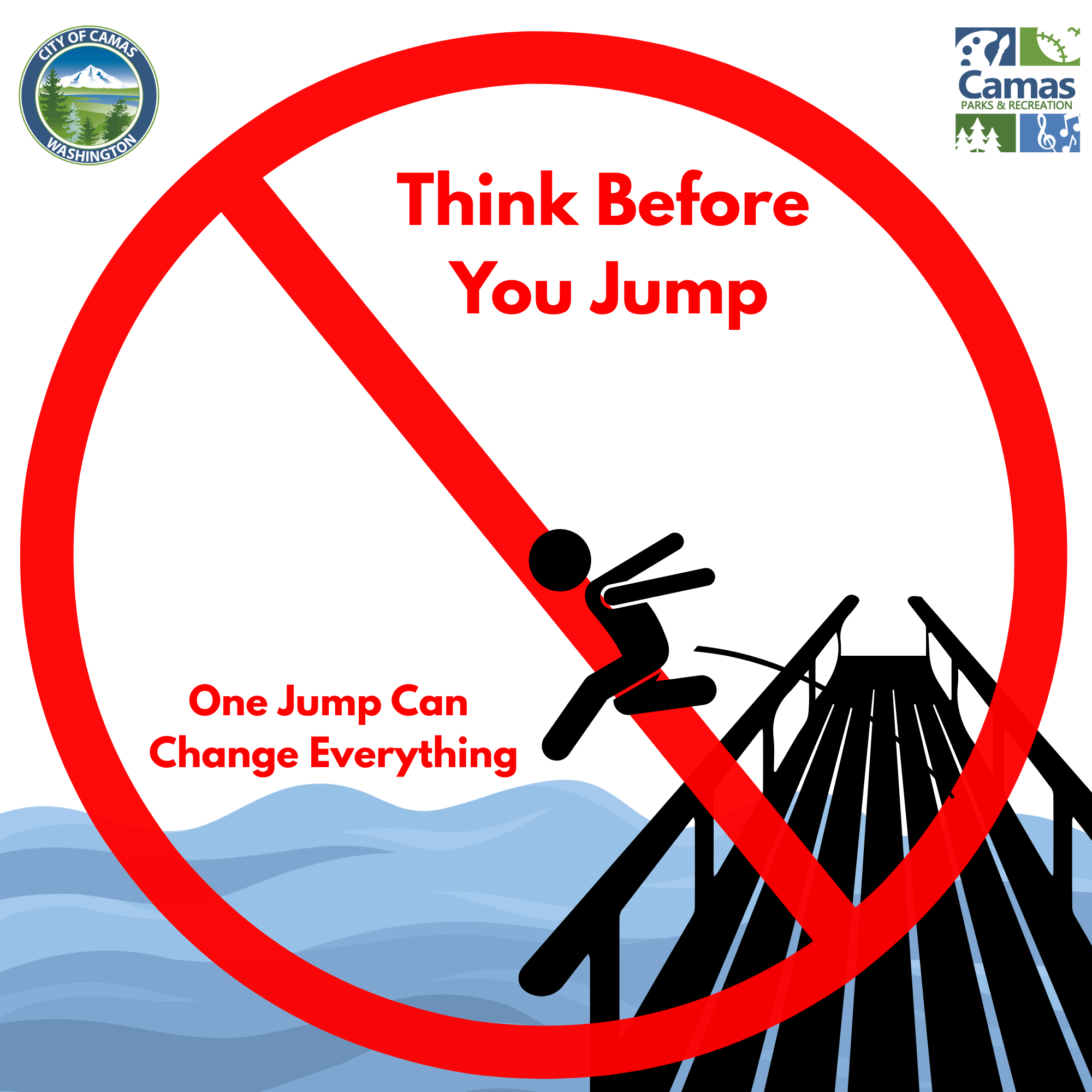
The City of Camas has launched a new campaign aimed at increasing water safety among youth in our area.
Each year, the City promotes water safety with three simple steps: wear a life jacket, know your limits and know the water. However, this year, we're drawing special attention to risky water behavior among youth, including jumping from bridges, by raising awareness of the dangers associated with cold-water shock, submerged hazards and unsafe swimming conditions. In other words, Think Before You Jump!
In addition to the campaign, we've also installed new warning signs along the pedestrian bridge between Lacamas Lake and Round Lake to highlight the potential dangers of jumping from the bridge. The bridge has become a popular spot for people to jump; however, those actions have resulted in injuries and drowning deaths over the years.
Some water safety facts:
For children ages 5–14, drowning is the second leading cause of unintentional injury death after motor vehicle crashes.
About 40% of drowning deaths among children ages 5-14 occur in natural water, such as lakes and rivers
When swimming in lakes and rivers, watch out for currents, waves, and underwater obstructions – they’re not just found in the ocean.
When it comes to Camas and the water surrounding our city, the lack of water clarity makes it difficult to see what’s underneath.
Water can look calm on the surface but have a current underwater that can be unexpected even for confident swimmers.
The American Red Cross recommends that if swimmers dive, they only do so in water that is clearly marked as safe for diving, and at least 9 feet deep with no underwater obstacles. Also, swimmers should not enter the water from a height, such as a bridge or boat.
Remember, warm air doesn’t always mean warm water in lakes, streams or rivers, and even water temperatures that may not sound very cold can be deadly. Plunging into cold water of any temperature becomes dangerous if you aren’t prepared for what the sudden exposure can do to your body and brain.
When your body hits cold water, “Cold Shock” can cause dramatic changes in breathing, heart rate and blood pressure, eventually leading to Hypothermia. The sudden gasp and rapid breathing alone can create a greater risk of drowning, even for confident swimmers in calm waters.
Wear a life jacket, know your limits and know the water.
Remember, one jump can change everything
The City of Camas has launched a new campaign aimed at increasing water safety among youth in our area.
Each year, the City promotes water safety with three simple steps: wear a life jacket, know your limits and know the water. However, this year, we're drawing special attention to risky water behavior among youth, including jumping from bridges, by raising awareness of the dangers associated with cold-water shock, submerged hazards and unsafe swimming conditions. In other words, Think Before You Jump!
In addition to the campaign, we've also installed new warning signs along the pedestrian bridge between Lacamas Lake and Round Lake to highlight the potential dangers of jumping from the bridge. The bridge has become a popular spot for people to jump; however, those actions have resulted in injuries and drowning deaths over the years.
Some water safety facts:
For children ages 5–14, drowning is the second leading cause of unintentional injury death after motor vehicle crashes.
About 40% of drowning deaths among children ages 5-14 occur in natural water, such as lakes and rivers
When swimming in lakes and rivers, watch out for currents, waves, and underwater obstructions – they’re not just found in the ocean.
When it comes to Camas and the water surrounding our city, the lack of water clarity makes it difficult to see what’s underneath.
Water can look calm on the surface but have a current underwater that can be unexpected even for confident swimmers.
The American Red Cross recommends that if swimmers dive, they only do so in water that is clearly marked as safe for diving, and at least 9 feet deep with no underwater obstacles. Also, swimmers should not enter the water from a height, such as a bridge or boat.
Remember, warm air doesn’t always mean warm water in lakes, streams or rivers, and even water temperatures that may not sound very cold can be deadly. Plunging into cold water of any temperature becomes dangerous if you aren’t prepared for what the sudden exposure can do to your body and brain.
When your body hits cold water, “Cold Shock” can cause dramatic changes in breathing, heart rate and blood pressure, eventually leading to Hypothermia. The sudden gasp and rapid breathing alone can create a greater risk of drowning, even for confident swimmers in calm waters.
Wear a life jacket, know your limits and know the water.